Why Harley Street Leads the Way in Advanced Hair Restoration
The name “Harley Street” has become synonymous with elite private healthcare in the UK, and for good reason. Over decades, this medical hub has attracted pioneering surgeons, rigorous clinical standards, and a culture of innovation that continuously raises the bar for cosmetic procedures. When it comes to a hair transplant, choosing a provider on Harley Street often means access to teams who specialize exclusively in hair loss, use state-of-the-art microsurgical tools, and practice gold-standard techniques such as FUE (Follicular Unit Excision), FUT (Follicular Unit Transplantation), and refined variations like DHI (Direct Hair Implantation). In practical terms, that translates into natural hairline artistry, higher graft survival, and results that blend seamlessly with your native hair.
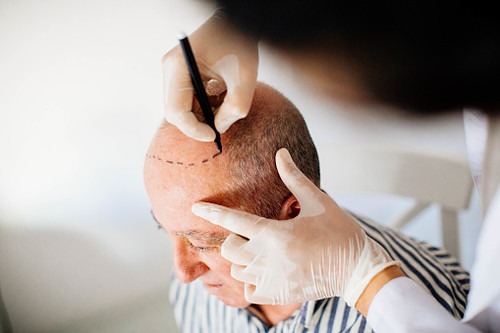
Beyond the technology, the hallmark of hair transplant harley street clinics is meticulous planning. Surgeons conduct detailed assessments: donor density mapping to estimate graft availability, scalp laxity measurement for FUT candidacy, and personalized hairline design anchored to facial proportions and long-term aesthetic harmony. You can expect robust pre-operative protocols, including medical history screening, discussion of adjunct therapies (finasteride, minoxidil, low-level laser therapy), and clear expectations around timelines and outcomes. This depth of preparation reduces risks like poor graft growth, suboptimal density, or unnatural hairline placement—issues that are hard to correct later.
Harley Street’s collaborative ecosystem also matters. Trichologists, dermatologists, anesthetists, and surgical technicians often work under one roof, enabling a more holistic approach to hair loss that extends beyond the operating room. For example, a patient with diffuse thinning may benefit from staged surgery combined with medical therapy to stabilize shedding. Another with early temple recession might prioritize conservative grafting to preserve the donor supply for future needs. This long-view philosophy—critical in hair transplant uk planning—helps ensure that the result not only looks good at 12 months, but also ages elegantly over a decade or more.
How to Choose the Best Clinic and Technique for Results That Last
Finding the best hair transplant london solution starts with understanding the core techniques and how they align with your goals. FUE, the most popular method, extracts individual follicular units using a micro-punch, leaving tiny dot scars that are typically inconspicuous even with short hairstyles. It’s flexible, ideal for targeted refinements, and allows strategic harvesting across broader donor zones. FUT, by contrast, involves removing a strip of scalp from the donor area, then dissecting it into grafts under high magnification. While FUT leaves a linear scar, it can yield a high number of robust grafts in a single session and often suits patients requiring substantial coverage or seeking to conserve donor hair for future sessions.
Technique alone doesn’t guarantee success. Surgeon skill in recipient-site creation—angle, direction, density—is the difference between a hairline that whispers “born with it” and one that looks staged. Ask about the team’s role division: who performs extractions, who places grafts, and how grafts are handled to minimize ischemia time and trauma. Enquire about microscope use during dissection, standardized graft hydration practices, and whether the clinic tracks graft survival rates. In a competitive hair transplant london landscape, these process details separate great from merely good.
Also consider long-term planning. Hair loss is progressive; a youthful, low hairline can look artificial if the mid-scalp thins further. A conscientious clinic will design with future loss in mind, preserving donor reserves and advising supportive therapies to slow miniaturization. Patients with curly or afro-textured hair need expertise in curl orientation and graft fragility; those of Asian or Middle Eastern descent may require nuanced density and caliber considerations. Finally, review before-and-after portfolios that match your hair type, Norwood scale, and goals, and read transparent post-op timelines describing shedding phases, shock loss, and expected milestones at 3, 6, and 12 months.
For expert-led guidance and examples of tailored solutions in hair transplant london, look for clinics that emphasize individualized plans, clear surgeon involvement, and measurable outcomes—so the result you see in photos is the one you’ll see in the mirror.
Real-World Outcomes, Case Studies, and Aftercare That Protects Your Investment
Consider three typical scenarios that underline the importance of matching technique, plan, and patient profile. Case 1: A 32-year-old professional with Norwood IV recession seeks a natural hairline and mid-scalp density. The clinic recommends a staged approach: an initial FUE session of 2,500–3,000 grafts to reframe the face, combined with medical therapy to stabilize the crown. Micro-angled incisions at 30–45 degrees mimic native growth patterns, while single-hair grafts define the hairline and multi-hair grafts boost density behind it. At 12 months, the patient has restored facial symmetry without exhausting donor reserves, leaving room for a future crown session if needed.
Case 2: A 45-year-old executive with high crown thinning and decent donor density opts for FUT to maximize graft yield in one day. Under stereomicroscopes, technicians dissect follicular units with minimal transection. Trichophytic closure techniques reduce the visibility of the linear scar, enabling the patient to maintain a medium-length haircut. FUT’s efficiency provides the density needed for a convincing crown swirl reconstruction. Over time, maintenance with finasteride helps lock in neighboring miniaturizing hairs, ensuring that the transplanted density remains harmonized with the native coverage.
Case 3: A 27-year-old gym enthusiast with early temple recession and strong family history of hair loss chooses conservative FUE plus a medical plan. The clinic sets a slightly higher, age-appropriate hairline with restrained temple closure, acknowledging potential future recession. Low-level laser therapy supports early healing, while counseling addresses expectations: shedding occurs at weeks 2–4; stubble returns by month 3; visible thickening begins at months 4–6; and final caliber and texture mature around 12–15 months. The outcome is subtle and intentionally future-proof.
Aftercare dictates how well your investment matures. The first 72 hours focus on graft protection: sleeping with head elevation, gentle saline sprays to keep sites hydrated, and avoiding pressure or friction. Crusts usually shed by day 10 with proper washing protocols. Clinics on Harley Street often provide detailed, day-by-day guides that reduce anxiety and protect graft survival. From weeks 2–8, temporary shedding—shock loss—can affect native hairs; this is normal and typically reverses. By months 3–6, new growth appears as fine “baby hairs,” thickening over the next half-year.
Scar stewardship matters as well. With FUE, tiny dot scars can be camouflaged by careful donor management and, if needed later, by scalp micropigmentation. With FUT, linear scars can be minimized by meticulous closure technique and post-op care, including avoiding heavy lifting early on to reduce tension. In the broader context of hair transplant uk standards, top clinics prioritize informed consent and comprehensive follow-up, from suture removal (FUT) to long-term check-ins at 6 and 12 months. The goal is not just graft survival, but a result that integrates with your lifestyle—whether that’s a tight fade, a classic side part, or simply the confidence to step out without a cap.
The final piece is lifestyle and medical optimization. Nutritional adequacy, managing stress, and considering evidence-based adjuncts like minoxidil or finasteride can stabilize surrounding hair and accentuate the transplant. For some, PRP (platelet-rich plasma) can be added as a supportive therapy, especially in cases of diffuse thinning. In a city renowned for excellence in hair transplant harley street services, the clinics that stand out are those that integrate surgical precision with medical strategy and personalized aftercare—delivering results that look natural today and remain balanced as hair changes over time.





Leave a Reply