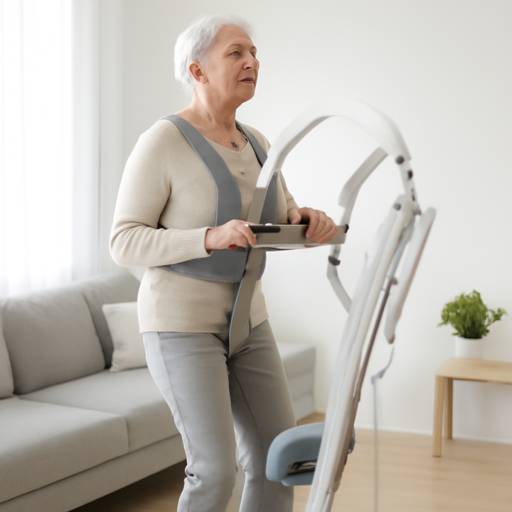
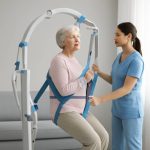
For many individuals facing mobility challenges, the simple act of rising from a seated position can become a significant hurdle. Whether recovering from surgery, managing a chronic condition, or dealing with age-related weakness, the inability to stand independently impacts both physical health and emotional well-being. This is where the sit to stand lift for home use becomes a transformative tool. Unlike full-body sling lifts that require a complete non-weight-bearing transfer, a sit-to-stand device is designed for individuals who have some upper body strength and can bear partial weight on their legs. This nuanced capability makes it a preferred choice for home care environments, promoting active participation in the transfer process while ensuring safety.
The fundamental mechanism of these devices is elegantly simple yet profoundly effective. The patient sits on a small sling or pad positioned behind their back and under their arms. As the lift activates, the patient is gently guided from a seated to a standing position. This controlled motion not only reduces the strain on caregivers—who often suffer back injuries from manual lifting—but it also provides the patient with a sense of agency and engagement. The standing motion encourages blood flow, aids in digestive health, and helps maintain bone density and muscle tone. Furthermore, using a device like this at home allows care to remain within the family unit, reducing the frequency of hospital readmissions and the need for professional in-home nursing visits. It is an investment in functional capability and long-term quality of life, turning a passive care scenario into an active rehabilitation opportunity.
Why a Sit to Stand Lift for Home Use Transforms Daily Care
The decision to introduce a mechanical lift into a private residence is often met with hesitation, particularly regarding space and complexity. However, the ergonomic and psychological benefits of a modern sit-to-stand lift are substantial. First and foremost, these devices directly address the physical toll that caregiving takes on family members. A caregiver attempting to manually pull a loved one from a chair risks serious back injury, which often means two people become incapacitated. The sit to stand lift for home use eliminates that risk by providing a mechanical advantage. With the push of a button, the lift handles the heavy lifting, allowing the caregiver to focus on guiding the patient and ensuring their comfort. This safety net is invaluable for families who wish to provide care at home for as long as possible.
Beyond caregiver safety, the device offers profound advantages for the patient’s recovery journey. Many individuals resist being lifted because it feels passive and disempowering. A sit-to-stand lift, conversely, requires the patient to actively place their feet on a base plate and engage their leg muscles. This active standing is a key component of physical therapy and helps maintain joint range of motion. For patients with conditions like osteoarthritis, hip replacements, or general deconditioning, the act of standing several times a day can prevent stiffness and improve circulation. The availability of these lifts in portable, foldable models means they can be moved between the living room, bedroom, and bathroom without major renovation. This adaptability ensures the patient is not confined to one area of the home, supporting a more normal and dignified daily routine. The transition from a passive care recipient to an active participant in their own mobility is one of the most significant non-clinical benefits offered by this technology.
Key Features to Evaluate in a Sit to Stand Lift for Home Use
Selecting the correct lift for a home environment requires careful consideration of several technical and practical factors. One of the most critical specifications is the weight capacity. While many standard home-use lifts support up to 400 pounds, bariatric models are available for individuals with higher weight requirements. Never assume a general rating will suffice; always verify the safe working load (SWL) specific to the model and the patient’s current weight. The base design is equally important. Modern lifts come with either a fixed base or a spreader base. For home use, a spreader base that opens manually or with an electric motor is often preferred because it allows the lift to access tighter spaces like a narrow bathroom doorframe while providing a wide, stable stance when the patient is standing. Look for a mechanism that operates smoothly and quietly, as noise can be disruptive in a quiet home environment.
Another crucial element is the sling or harness design. Unlike slings used for total lifts, sit-to-stand slings generally wrap behind the back and under the arms. The material should be breathable, washable, and comfortable for extended periods. Some slings are designed specifically for repositioning, while others are better suited for toileting. The leg opening design must allow the caregiver to position the sling easily without excessive bending. Additionally, consider the power source. Battery-operated lifts offer freedom of movement without a trailing power cord, which is a significant safety advantage. Ensure the battery is sealed lead-acid or lithium-ion and can hold a charge for an entire day of transfers. Finally, examine the floor clearance and the base leg length to ensure the lift can easily slide under the bed, chair, or toilet that the patient will use. A slightly adjustable chassis can make the difference between a cumbersome tool and a seamlessly integrated part of the home care setup.
Real-World Applications: From Hospital to Home and Beyond
The transition from a clinical rehabilitation setting to a private residence can be jarring, but the sit-to-stand lift serves as a bridge between these environments. Consider the case of a 72-year-old woman recovering from a total knee replacement. In the hospital, she used a specialized lift with the help of physical therapists. Upon returning home, her husband—who is retired and has a history of lower back issues—was tasked with helping her move from the recliner to the bathroom. Without the lift, the husband would have taken on a physically impossible task, risking injury and eroding the patient’s confidence. By installing a sit to stand lift for home use, the rehabilitation protocol continued seamlessly. The patient could stand every time she needed to void, which is critical for preventing urinary tract infections and maintaining kidney function. The husband remained safe, and the couple maintained their independence without needing 24-hour home health aides.
A more nuanced application occurs in the management of progressive neurological conditions like Multiple Sclerosis (MS) or Parkinson’s Disease. For these patients, standing ability can fluctuate day by day, or even hour by hour. A sit-to-stand lift provides a safety net that allows for care planning flexibility. On a good day, the patient may stand with minimal assistance. On a bad day, the lift provides the full support needed. This adaptive capability reduces the psychological distress that comes with unpredictable mobility loss. Furthermore, these lifts are increasingly being integrated into home bathroom setups. When combined with a rolling commode or a bedside toilet, the same lift can be used for upright toileting, which is far more dignified and less invasive than using a bedpan. The ability to stand and pivot to a shower chair also opens up possibilities for upright showering, which is a more pleasant experience for the patient and easier for the caregiver to manage. The flexibility of the equipment transforms the home environment from a place of limitation to a space for active living and recovery.
From a financial perspective, investing in a high-quality sit-to-stand lift can be cost-effective over time. Families often calculate the expense of a lift against the cost of short-term respite care or the expense of hiring a private duty nursing assistant. The lift, when paired with proper caregiver training, can reduce the total hours of paid help needed. Many insurance providers, including Medicare Part B, may cover a portion of the cost if the device is deemed medically necessary and prescribed by a physician. Documentation must clearly state that the patient can bear weight and has some upper body strength, as these are the clinical criteria for a sit-to-stand lift versus a full-body lift. The real-world application of this technology clearly demonstrates that it is not merely a piece of hardware but an essential component of a comprehensive home care strategy that prioritizes safety, dignity, and long-term functionality for both the patient and the caregiver.